Clean energy generation, smart consumption
Our strategy
Imagine: 55,000 cheering fans, spotlights on, the grass perfectly lit, and hundreds of catering appliances running at full power. On a concert day, we consume an average of 30,879 kWh – enough to power around 12 households for a year. On match days, that figure is slightly higher, at an average of 32,319 kWh. Because matches take place throughout the year and we need more energy in winter to keep the building warm, consumption increases even further.
This high energy demand comes with responsibility, which we take seriously. And we are taking that responsibility seriously. For years, we have been fully committed to the transition from energy consumer to energy innovator, leading the way internationally in the events industry.
“As a stadium, we are very aware of our CO2 emissions. That is why we started reducing our energy consumption and CO2 emissions years ago. We work with partners to get the best knowledge and innovation from the market and inspire others to join in and make a positive contribution to the world around us.”

Meindert Slagt
Manager Asset & Facility Management
Johan Cruijff ArenA

Our energy
and CO2 targets
The bar is set high, and we like it that way. Our energy ambition is crystal clear and measurable.
goal 2030
37%
less energy consumption
Compared with 2017/2018. Not by cutting back on spectacle, but by using equipment, installations and sensors more intelligently.
goal 2030
O
CO2 emissions in scope 1&2
Everything we can control ourselves, from lighting to cooling, runs on green energy.
goal 2030
25%
less CO2 emissions throughout our value chain
Compared with 2022/2023 – from supplier transport to the production of the beer we sell. We also want to reduce our impact where we have no direct control (our scope 3 emissions).
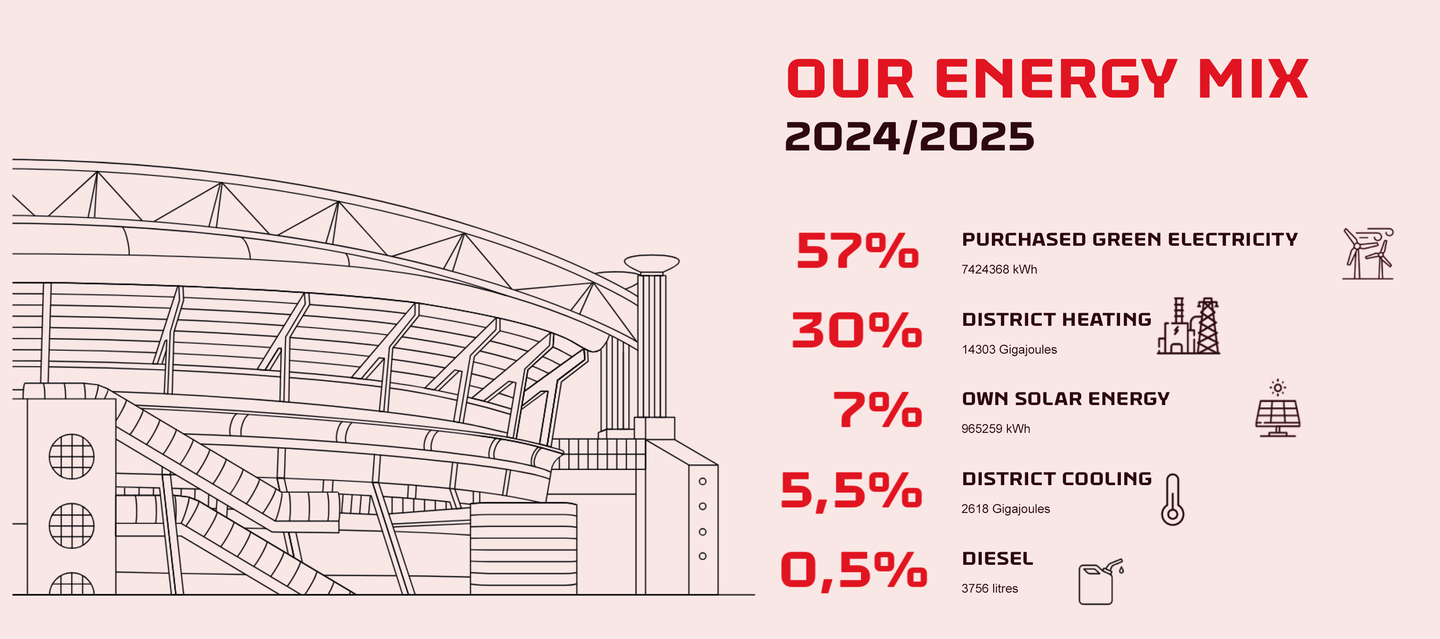
2024/2025
Total CO2 emissions ArenA
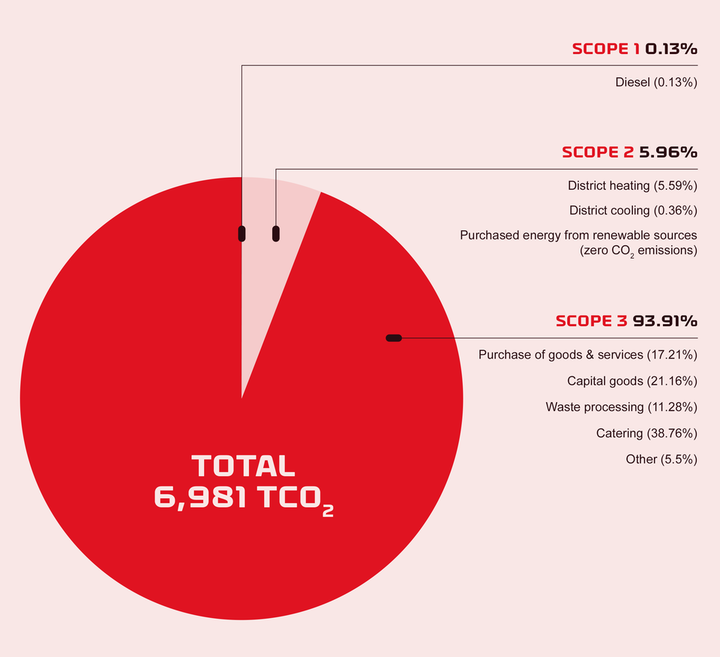
2024/2025
Scope 3 in focus
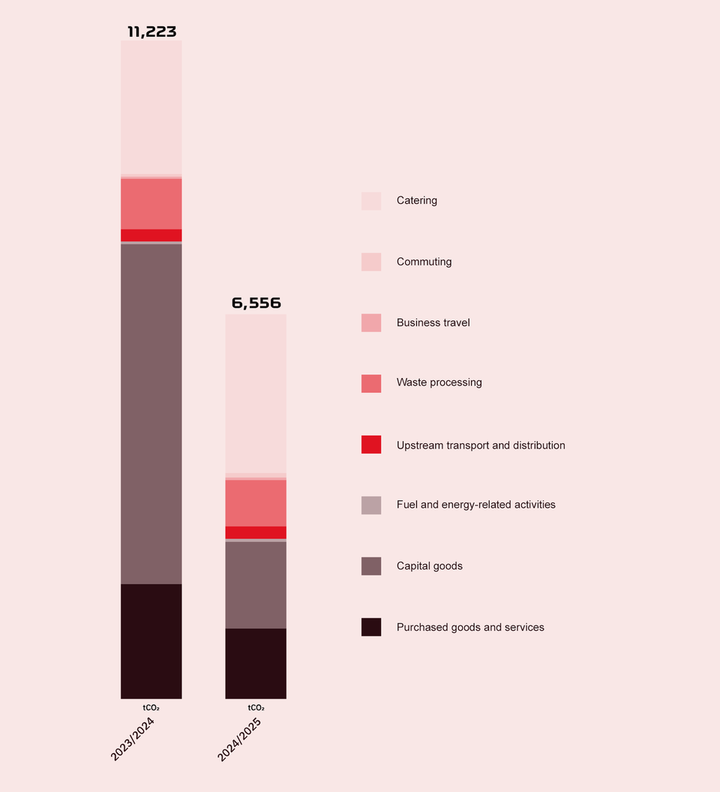
Results last year
The largest contribution comes from catering activities, followed by the purchase of services and goods, capital goods and waste processing. In 2023/2024, a large peak is visible under “Capital goods”. This was due to purchases that had been postponed during the coronavirus years being made up for, including a large number of new stadium seats.
Ambition
In the 2025/26 financial year, we will draw up a climate transition plan outlining our approach to achieve these objectives.
our game plan
Smarter, more economical, cleaner
Kicking the fossil fuel habit
We have stopped using gas to heat the stadium, but we have not yet completely eliminated fossil fuels. This is because, unfortunately, part of the district heating we use still comes from gas-fired power stations. Together with our supplier Vattenfall, we are working to ensure that the last drop of fossil fuel disappears from our system by 2040.
Every watt counts
Together with our construction partner BAM, we’re always on the hunt for energy optimisations. From smart motion sensors that only turn on the lights when necessary to energy-efficient catering equipment that uses less power but performs just as well. Every little bit helps.
Battery power
We don't even waste renewable energy. Our two super batteries – one of which is made from 148 recycled car batteries – store energy when the sun is shining and kick in when our energy demand is high or to help stabilise the power grid during peak times.
100% green energy in action
We have already managed to run concerts and football matches on 100% green energy, most of which we generate ourselves. We want to make that the norm.
2024/2025
Towards Net Zero in scope 1&2
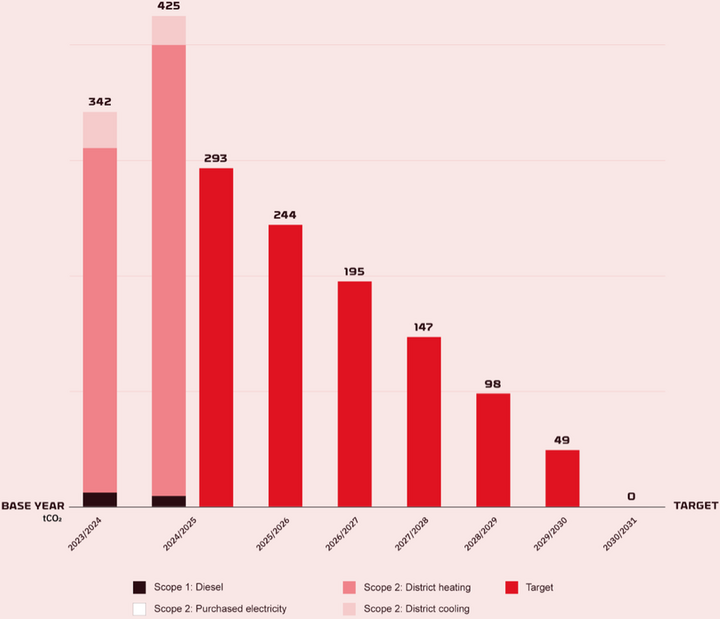
Results last year
Last year, our scope 1 emissions fell by 22% because we sold a (diesel) forklift truck, but our scope 2 emissions actually rose by 26% due to a small increase in our consumption and a higher emission factor because Vattenfall used more gas-fired installations to generate district heating.
Ambition
To achieve our goal of Net Zero in scope 1 and 2 by 2030, two things need to change. We need to move away from diesel in our operations and find a greener alternative to district heating.
2024/2025
37% less energy consumption in 2030
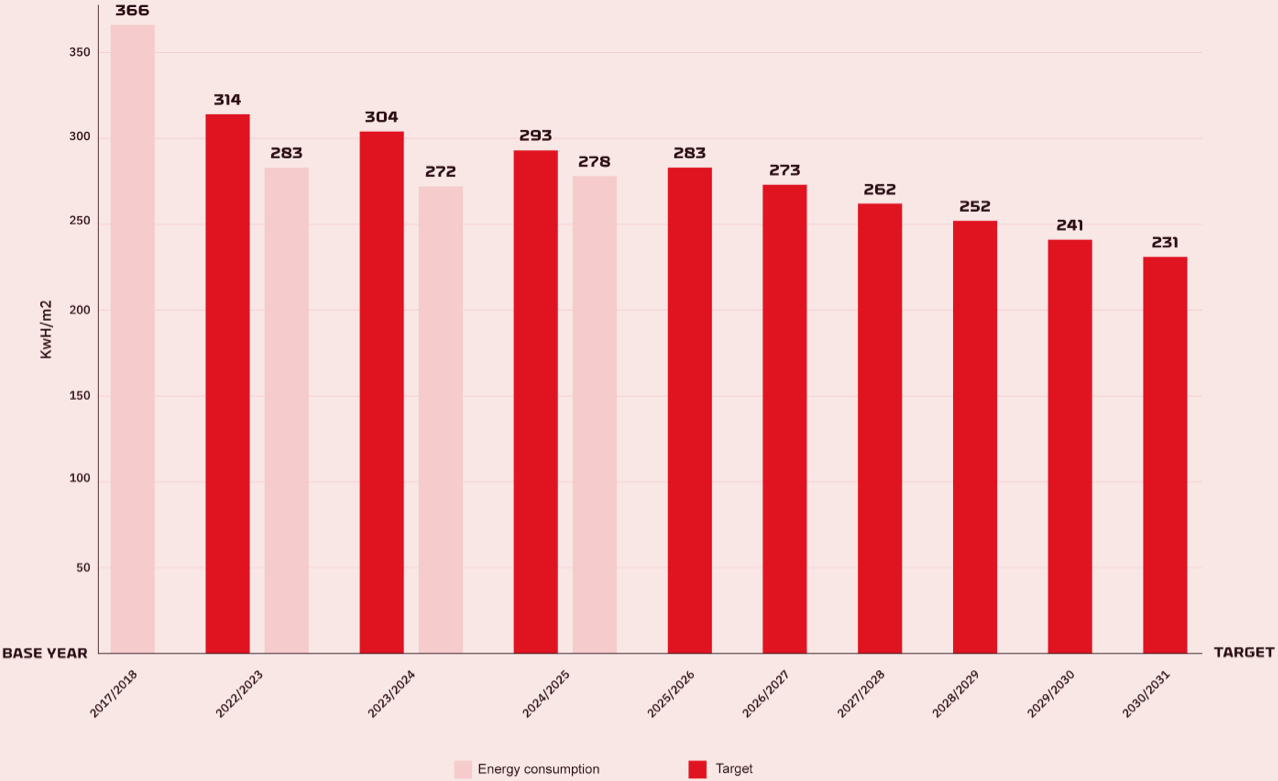
Johan Cruijff ArenA has an ambitious goal: 37% less energy consumption in 2030 compared with 2017/2018. We are well on our way! Indeed, we have already saved 22% since the base year (366 kWh/m²). Our ultimate goal is 231 kWh/m² in 2030. Through annual optimisation and accurate monitoring of our actual consumption, we are making our stadium more energy efficient step by step.
Green
milestones
Our green journey began in 1997, long before sustainability became mainstream. We are true early adopters, always on the lookout for the next innovation.
1997
Keep it cool
While others were still installing air conditioners, we thought outside the box. We pumped cool water directly from the nearby Oudekerkerplas lake to our offices and changing rooms. No more energy-guzzling cooling, just pure natural power. Simple, smart and innovative.
1997
Warm, warmer, warmest
We switched from gas heating to district heating. An important first step towards becoming natural gas-free.
2006
Energy on the escalator
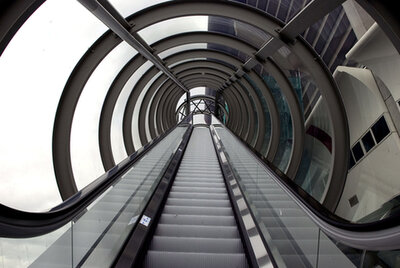
Who says an escalator only consumes energy? Ours generate electricity during use. A small innovation with a big impact.
2014
Sun on the roof
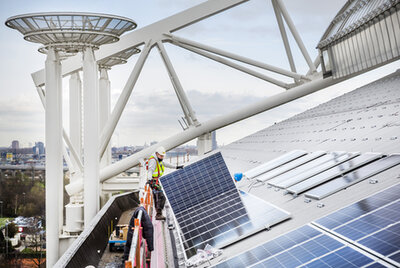
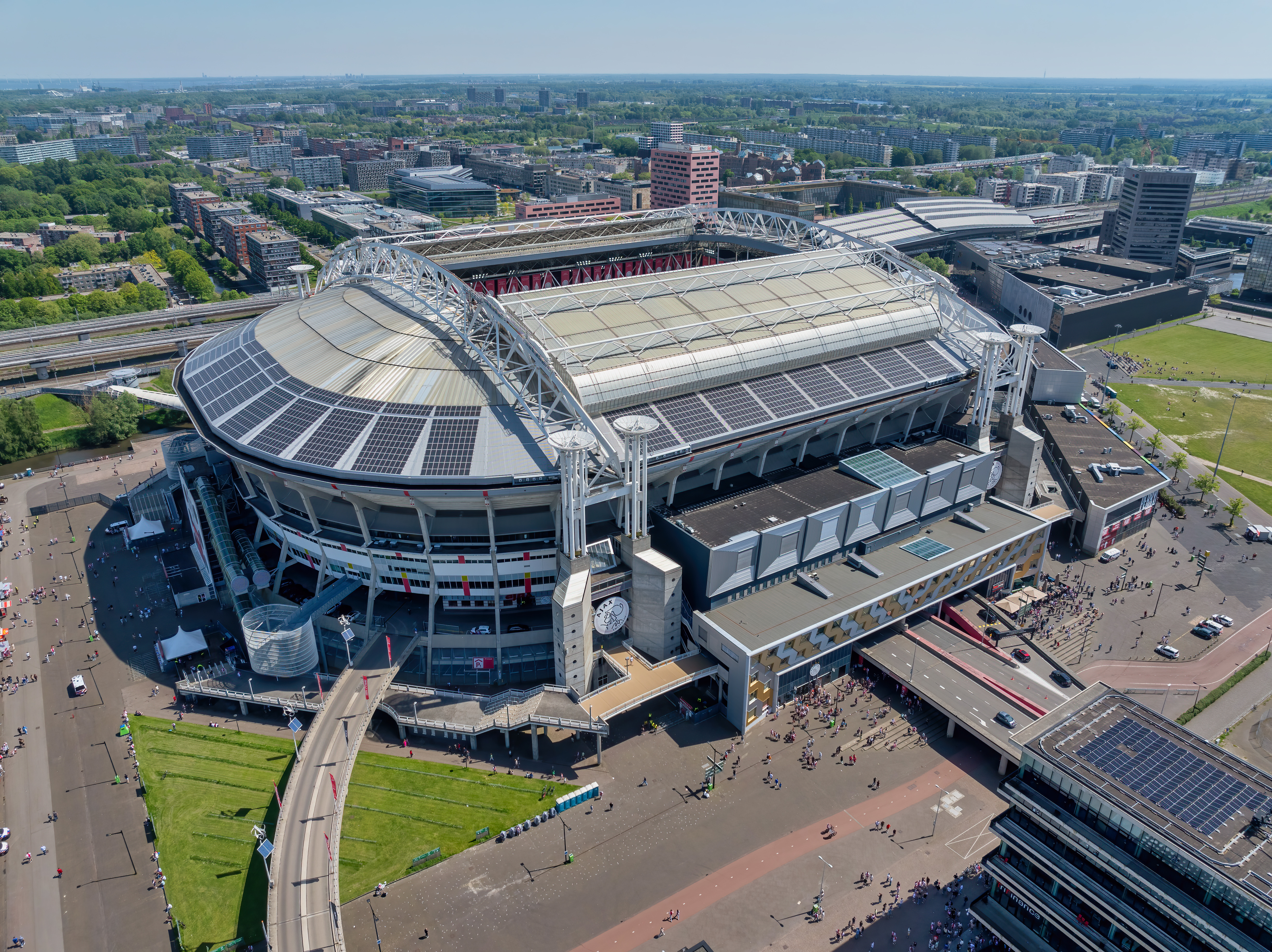
With 4,200 solar panels on the roof, we became our own energy supplier. This accounts for 10% of our total electricity consumption and in 2014 was one of the largest solar installations on a sports stadium worldwide.
2018
Second super battery scores
With a second super battery, we doubled our green energy storage capacity. Now we not only help ourselves, but also help to keep the power grid stable during energy peaks.
2019
Gas-free
We replaced gas-fired installations with electric alternatives.
2022
Grass powered by light
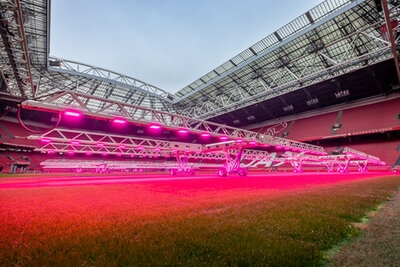
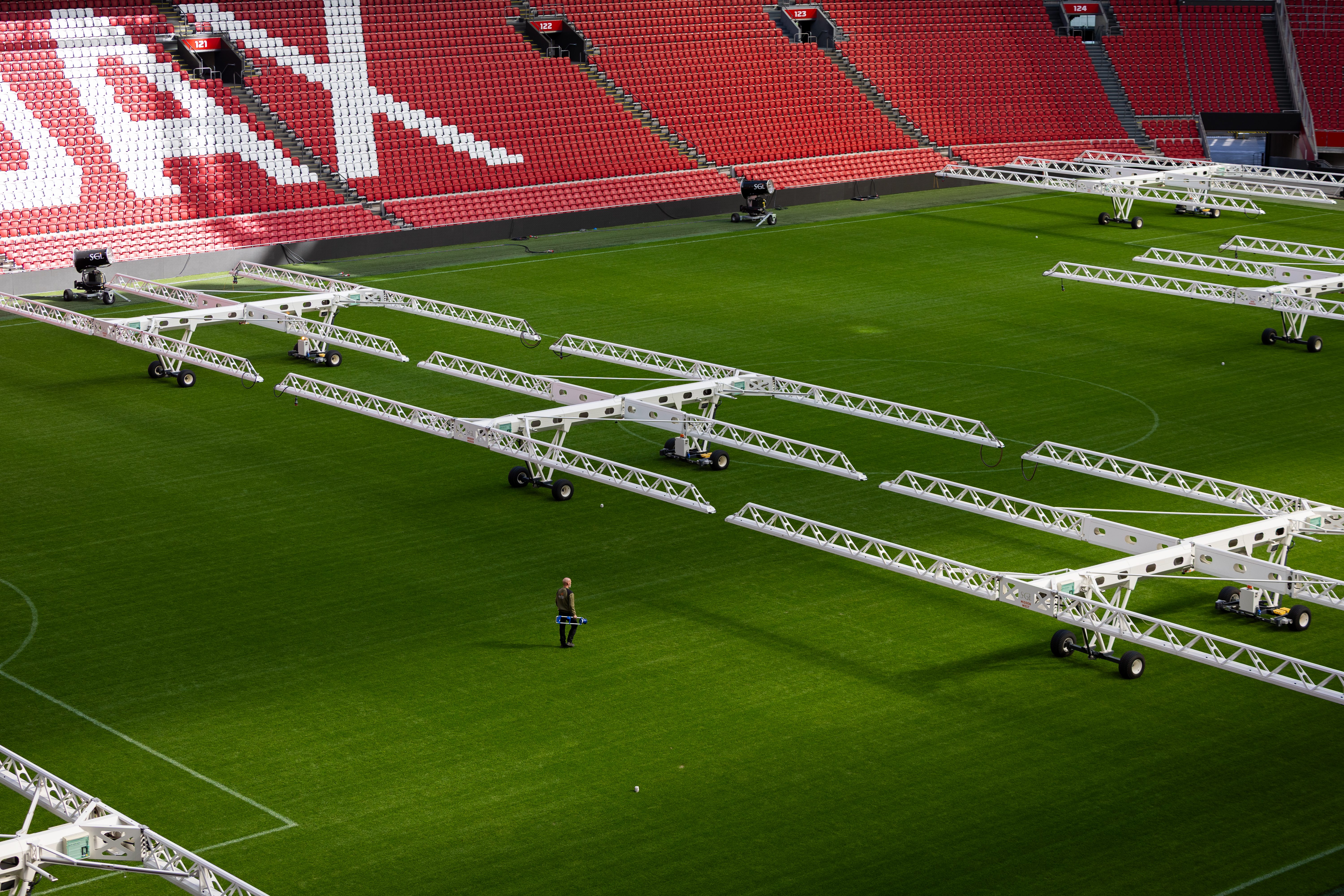
LED grow lights make our pitch stronger and are also 6% more energy-efficient. Stronger roots for the turf and a lower bill – that's what we call a win-win.
read more

2024
Second super battery scores
With a second super battery, we doubled our green energy storage capacity. Now we not only help ourselves, but also help to keep the power grid stable during energy peaks.
2024
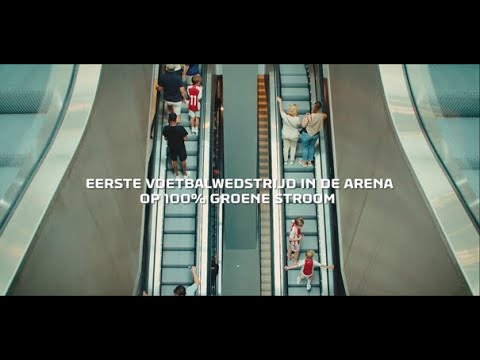
First match on 100% green electricity
During Ajax - Heerenveen, the ArenA ran on 100% green electricity for the first time. The energy from the 4,200 solar panels on the ArenA roof is stored in two super batteries with a total capacity of 8.6 megawatt hours. The ArenA batteries are further supplemented with green energy from a local wind turbine and solar park, purchased through the energy marketplace.
2025
Energy-efficient cooling = super cool
New, energy-efficient refrigerators in all catering outlets ensure lower consumption but better performance. Because in the hospitality industry, too, working smart is better than working hard.
In
practice
spotlight
Energy-neutral ArenApoort
The bar can always be raised higher
We always want to raise the bar. We cannot do it alone, but by working together we can achieve more. This project has been important in this mission.
read more
spotlight
Climate offense in the kitchen
From red meat to green goals
Step by step, we are building a future-proof stadium. We are also well on our way in terms of climate.
read more
challenge
The grass could be greener
The challenge on the pitch
Electric mowers? Check. Solar panels on the roof? Check. But some sustainability ambitions clash head-on with the reality of professional sports. What are we currently facing?
read more
challenge
Visitor mobility – towards zero emissions
The challenge facing us
We are succesfully making our operations more efifcient and sustainable, but the greatest impact lies beyond our direct control: in the journeys made by tens of thousands of fans every week. What are we currently facing?
read more
The next phase
We are well on our way, but you don't become an energy champion in a single season. In the coming years, we will tackle the challenges that will make a big difference.
We are working on reducing consumption per square metre even further. As a stadium, we want to welcome more shows and visitors, but with much less (environmental) impact per person. And then there is the biggest challenge: the 99% scope 3 emissions in our value chain. In the coming seasons, we will measure even more accurately and collaborate more effectively with partners to make significant progress in this area as well. Because only together can we make the entire chain cleaner.
“We have been playing in the ArenA for almost thirty years now, but thanks to continuous development, it still feels like one of the most modern stadiums in Europe. Moreover, over the years, Johan Cruijff ArenA has become a home from home for us and our fans, we love to play here. The fact that the ArenA is also a pioneer in the field of sustainability and that we continue to raise the bar in this area together gives us a lot of energy for the future.”

Menno Geelen
Managing Director
Ajax

Lees meer
Next page

A place for everyone
Clean energy is the basis, but who are we actually doing it for? Read how we are creating a stadium where everyone is welcome, step by step.
Energy-neutral
ArenApoort
Raising the bar
As a neighbourhood, Amsterdam-Zuidoost is growing rapidly. New homes, sustainable businesses, and the city centre ArenAPoort has the ambitious dream of becoming energy neutral by 2040. The big problem: the power grid cannot keep up with the pace. Grid congestion means the power grid is overloaded. Companies are stuck in their growth plans, sustainable projects are on hold, and the energy transition is in danger of stalling.
Our game plan: EnergieHub Zuidoost
We started the EnergieHub Zuidoost project together with TU Delft, the City of Amsterdam, Liander, Utrecht University, AMS Institute and Enertrans.
The mission? To achieve sustainability and combat grid congestion by sharing, storing and using energy smartly. Not waiting for the power grid to be expanded, but creating local solutions with our mega batteries.
The tactics in action
Data as a coach - We developed tools that provide real-time insight into the capacity of the power grid. This allows supply and demand to be better matched.
Digital twin of Amsterdam-Zuidoost - TU Delft built a digital copy of ArenAPoort: buildings, energy infrastructure, charging stations, solar panels, heat pumps. In this virtual world, we test scenarios without risk.
Neighbourhood scan for energy opportunities - With Alliander's Energy Neighbourhood Scan, we mapped out all opportunities for collaboration. Who has too much energy? Who has too little?
The results
The research shows that collective energy storage and exchange in Amsterdam-Zuidoost can drastically reduce peak loads. The power grid becomes more stable, and we can continue with our growth and sustainability plans.
Our batteries are already playing an active role: they not only help us, but also stabilise the power grid during busy periods.
The next phase
The real game changer: we are setting up a local energy cooperative in Amsterdam-Zuidoost. Residents and businesses are investing together in sustainable energy solutions such as solar panels. Energy is becoming a team sport where everyone wins.
The bigger picture
This is more than a technical project – it is a blueprint for the whole of the Netherlands. We are proving that you can combine energy transition and economic growth without investing billions in new infrastructure. Amsterdam-Zuidoost will become the energy laboratory of the future.
Want to know more about this exciting project?
Read all about it on our Net Positive website
“Here we are showing how cooperation between the government, businesses and knowledge institutions can tackle grid congestion while providing room for sustainable growth in Amsterdam-Zuidoost. Together with EnergieHub Zuidoost, we are building a future-proof, inclusive and sustainable city.”
Richard Ruitenbeek
Advisor to the City of Amsterdam
Climate offense
in the kitchen
From red meat to green goals
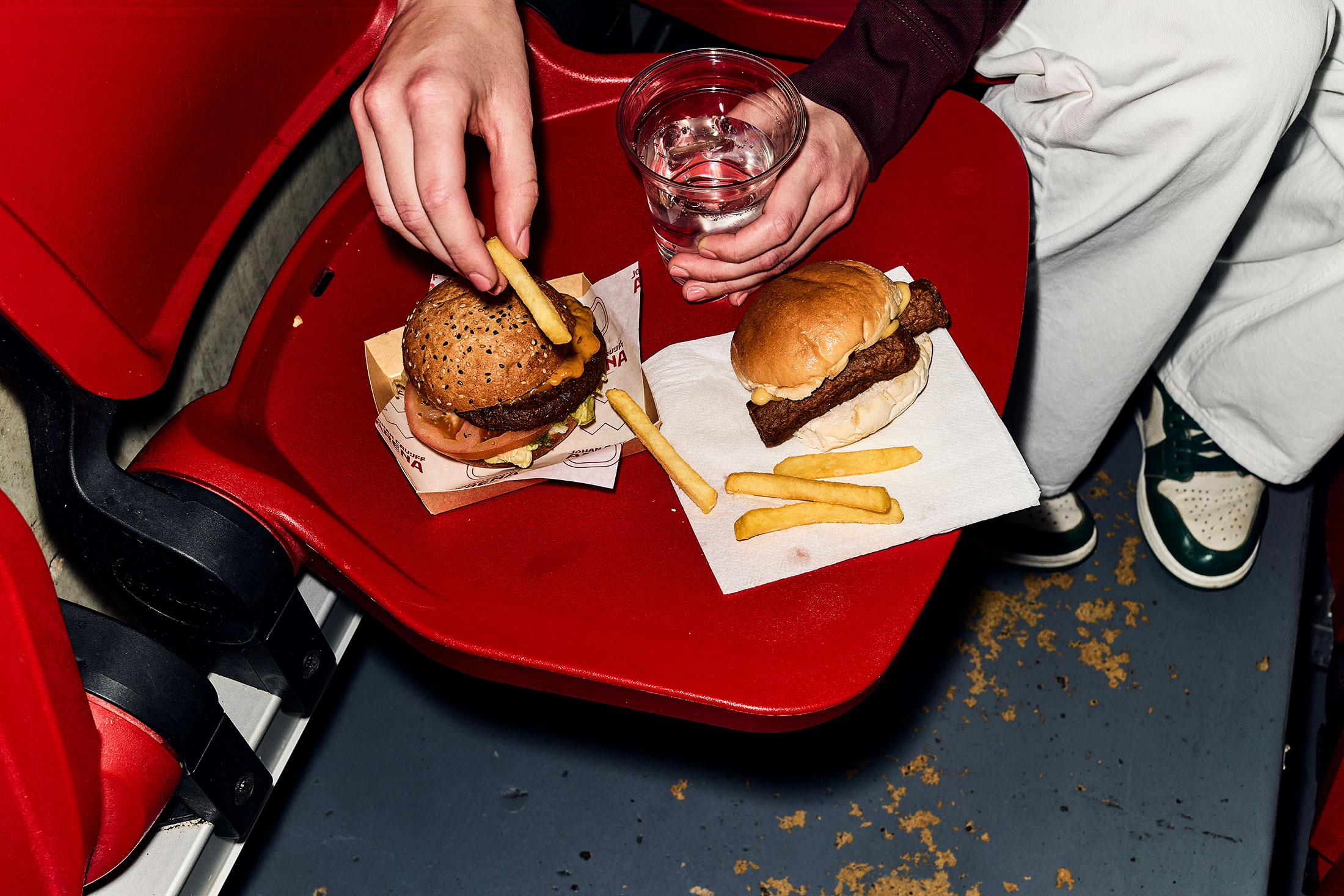
Food and beverages in the ArenA are an important factor in reducing our carbon footprint. Conscious choices – such as more plant-based options and seasonal ingredients – can significantly reduce the environmental impact. Chicken meat produces much less CO2 than beef or pork, and vegetarian products even less. Together with our catering partners, we ensure that tasty and conscious eating go hand in hand.
How we approach it
Catering partners Hutten and Levy calculate the CO2 emissions per dish and analyse the ratio between animal and plant-based proteins. This is because plant-based proteins (such as veggie burgers) have much lower CO2 emissions than animal proteins (such as those found in beef or pork). We use these insights to make our menu more sustainable, step by step. The result? A significant reduction in our catering emissions, without compromising on taste.
Smart switch
Levy made a bold tactical switch. Beef is a major source of greenhouse gases, so we looked for alternatives.
Phase 1: The 50:50 signature burger - First, Levy introduced burgers made from half beef and half mushrooms. This hybrid version had better nutritional value: less saturated fat and salt, more fibre. Plus a CO2 reduction of 13.5% per kilo.
Phase 2: The chicken burger transfer - Levy then switched to 100% chicken burgers. From 31.6 kg of CO2 per kilo of beef burger to just 7 kg of CO2 per kilo of chicken burger – a reduction of 78%!
Vegan as the new standard
Demand is shifting towards healthier and vegetarian options. Hutten now serves vegetarian dishes as standard at business events. Result: average CO2 emissions per kg of product fell by 22% compared with the previous season. Leftover products are given a new purpose as lunch for ArenA employees, creating a circular chain within our stadium.
The result
More plant-based options, less food waste and more seasonal ingredients. We are proud that we are reducing the CO2 per kg of product on our menu for the second year in a row, and that this goes hand in hand with tasty food.
New season, new innovations
We continue to innovate. New plant-based alternatives, less food waste and seasonal menus are on the agenda. Because a delicious and increasingly sustainable menu is a goal we strive for every day.
“The collaboration with the Johan Cruijff ArenA demonstrates that sustainability and hospitality can go hand in hand. By cooking more plant-based dishes without compromising on taste and experience, we're increasing our positive impact on our environment. Sometimes we take two steps forward and one step back, but our partnership proves that together we can truly make a difference.”
Mark Roselle
Senior Venue Manager
Hutten
The grass could be
greener
The challenge on the pitch
In our stadium, grass quality is the absolute number one priority. After all, the pitch is the stage on which Ajax and the Dutch national team must perform – only the best is good enough. This creates a unique tension between our sustainability ambitions and the unprecedented quality requirements of sports at the highest level.
The problem? Our grass team has various machines for maintaining our iconic pitch. From mowers to tractors and sand spreaders – and each machine runs largely on fossil fuels. While we dream of a fully electric fleet, we are repeatedly confronted with the harsh reality: the technology must not only be clean, but also perform perfectly under the immense pressure of top-level sport.
Towards a Net Positive approach
Our Facilities department and the turf team critically examine every opportunity to become more sustainable – from procurement to energy consumption, maintenance and waste. We continuously challenge suppliers to come up with solutions that meet our strict requirements.
The rules of the game are crystal clear:
- Turf quality comes first.
- Reliability must not be compromised. Innovation must fit within performance requirements.
- Every experiment is thoroughly tested before it touches the turf.
In recent years, we have achieved a mix of successes and learning moments. The mowers have now been successfully replaced with electric versions. But for the other machines, it’s more complex.
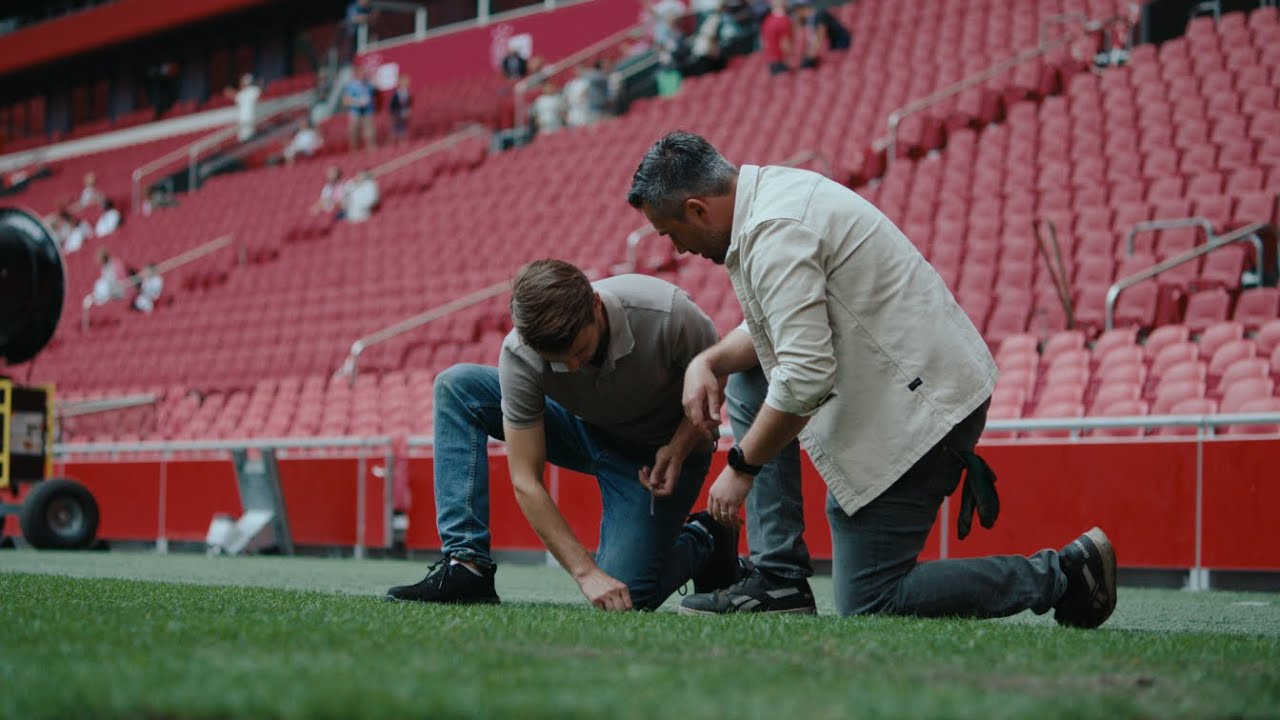
Getting started
In the 2022/2023 season, we put it to the test with an electric tractor as a replacement for our fuel-powered version. The reality was confronting:
- Reliability: The electric tractor regularly broke down.
- Weight: Heavy batteries caused rutting on the pitch.
- Functionality: Connected machines did not work properly.
- Performance: Simply not at the level our pitch requires.
Conclusion? We were forced to return to fuel, but with biofuel as the best alternative within the current possibilities. For specialised equipment such as sand spreaders, there are simply no electric alternatives yet.
This transition is a marathon, not a sprint. We don’t yet have a date when our full fleet will be electric. But we continue to experiment and learn, machine by machine.
Our vision for the future
The ultimate goal? A fully electric fleet that delivers the same top performance as our current machines. Equipment that not only reduces our CO₂ emissions, but also maintains the quality standards that Ajax players and Dutch internationals rely on.
The ultimate goal
A fully electric fleet that delivers the same top performance as our current machines.
“The transition to an increasingly sustainable turf requires patience and craftsmanship. We want the best machines for our pitch and for our planet. Those two ambitions go hand in hand, but it takes time to find the perfect balance.”
Roy van Dijk
Field Manager
Johan Cruijff ArenA
Visitor mobility
towards zero emissions
The challenge facing us
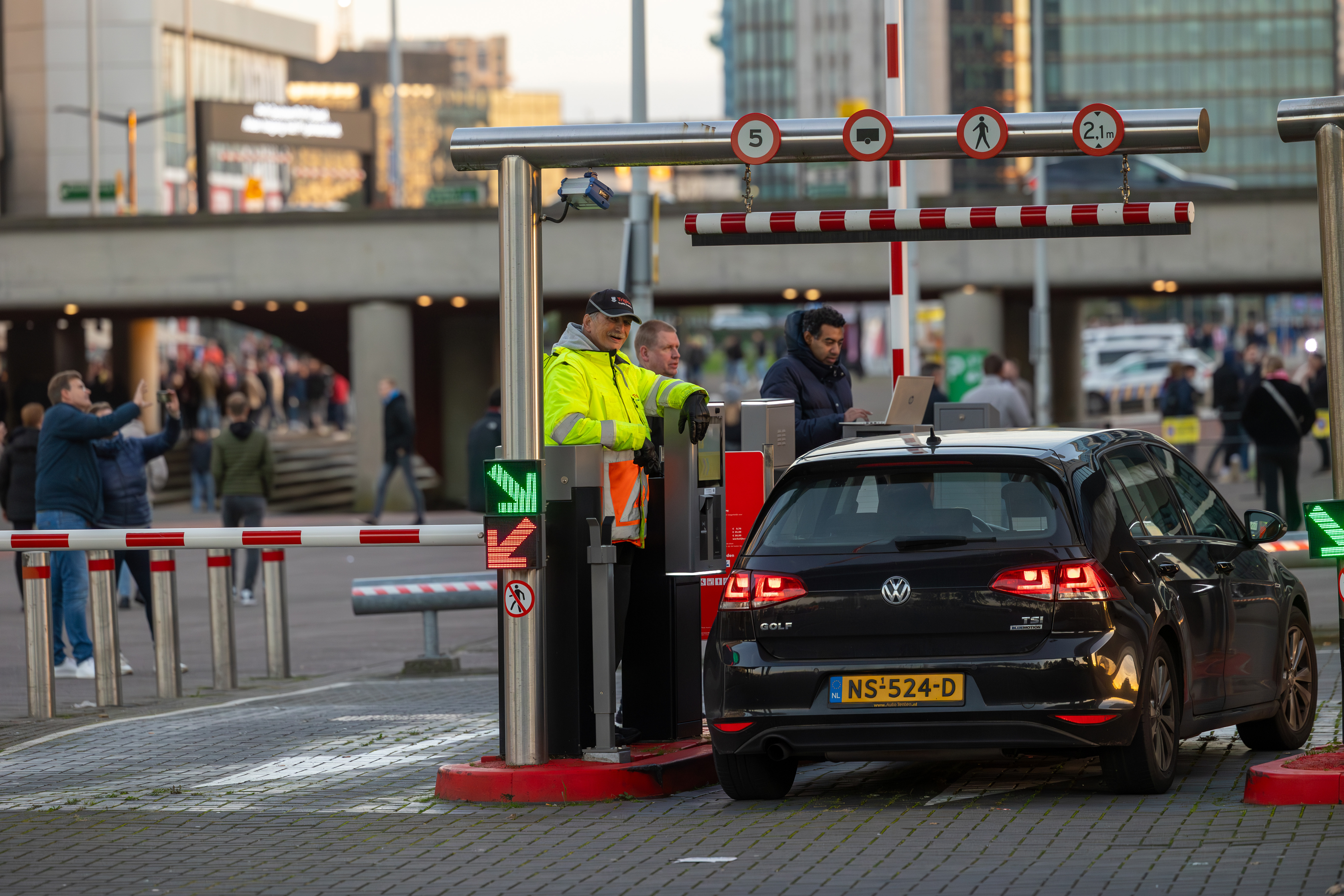
Every week and every concert evening, tens of thousands of fans come to Johan Cruijff ArenA. This creates an unforgettable atmosphere, but also traffic jams, full car parks and CO₂ emissions. We have no control over our visitors' journeys, but we do feel jointly responsible for the emissions. Because every kilometre our visitors travel has an impact on the climate, and there are often alternatives.
Our ambitious goals
We are setting the bar high:
2030: 15% reduction in CO₂ emissions per visitor when travelling to the stadium.
2040: 45% reduction in CO₂ emissions per visitor when travelling to the stadium.
We focus on the journey that each visitor makes from their point of departure in the Netherlands to our stadium. Unfortunately, we have little control over international travel.
Teamwork with the best players
We collect travel data together with the Dutch Railways (NS), the municipal transport authority (GVB), the Connexxion bus operator and the City of Amsterdam. We know exactly how many cars are in our car parks, how many people come by public transport, and thanks to camera images we can estimate how many visitors use a bicycle or scooter.
In a covenant with local partners, we are committed to a “safe, efficient, sustainable and seamless journey”. Through pilot projects, we are investigating how more people can travel to the stadium in a more sustainable way, such as by public transport, bicycle or shared cars.
Pilot: The Toppers Express
During the Toppers concerts in 2025, we introduced the Toppers Express in collaboration with NS, Rocket and Livecrowd: a special party train from the ArenA to Eindhoven, with stops in 's-Hertogenbosch and Boxtel.
The idea: take the train to the ArenA and chill out on the party train on the way home. This makes travelling to the ArenA by train a lot more attractive!
The score:
- 900 passengers over two days. 40% would otherwise have travelled by car.
- Positive feedback: quiet journey with a guaranteed seat.
- 500 fewer people at Bijlmer ArenA station during the peak rush after the concert.
Lessons for the next edition
This first trip has left us wanting more, and we also learned that:
- Communication is everything: we need to make the party train more visible and start communicating earlier – from the moment tickets go on sale.
- Expansion opportunities: to other geographical regions as well.
- Start early: Selling combination tickets and communicating the route more clearly increases the impact.
Think big
Every kilometre from car to train, bus or bicycle is a gain for the environment. We encourage carpooling and are working with public transport partners to find better connections. Visitor mobility is our biggest challenge, but also a great opportunity. Through innovation and collaboration, we are turning the tide: from traffic congestion to traffic enjoyment.
Think big
e encourage carpooling and are working with public transport partners to find better connections.
“The area around the ArenA is changing rapidly, from a large-scale area to a densely built-up second city centre. At the same time, climate change is forcing us to think differently about mobility. If we don't offer our visitors attractive alternatives, a fun experience can turn into a nuisance — and we must never let that happen.”
Ydze Rijff
Consultant Mobility & Environment
Johan Cruijff ArenA