Towards a circular stadium
Our strategy
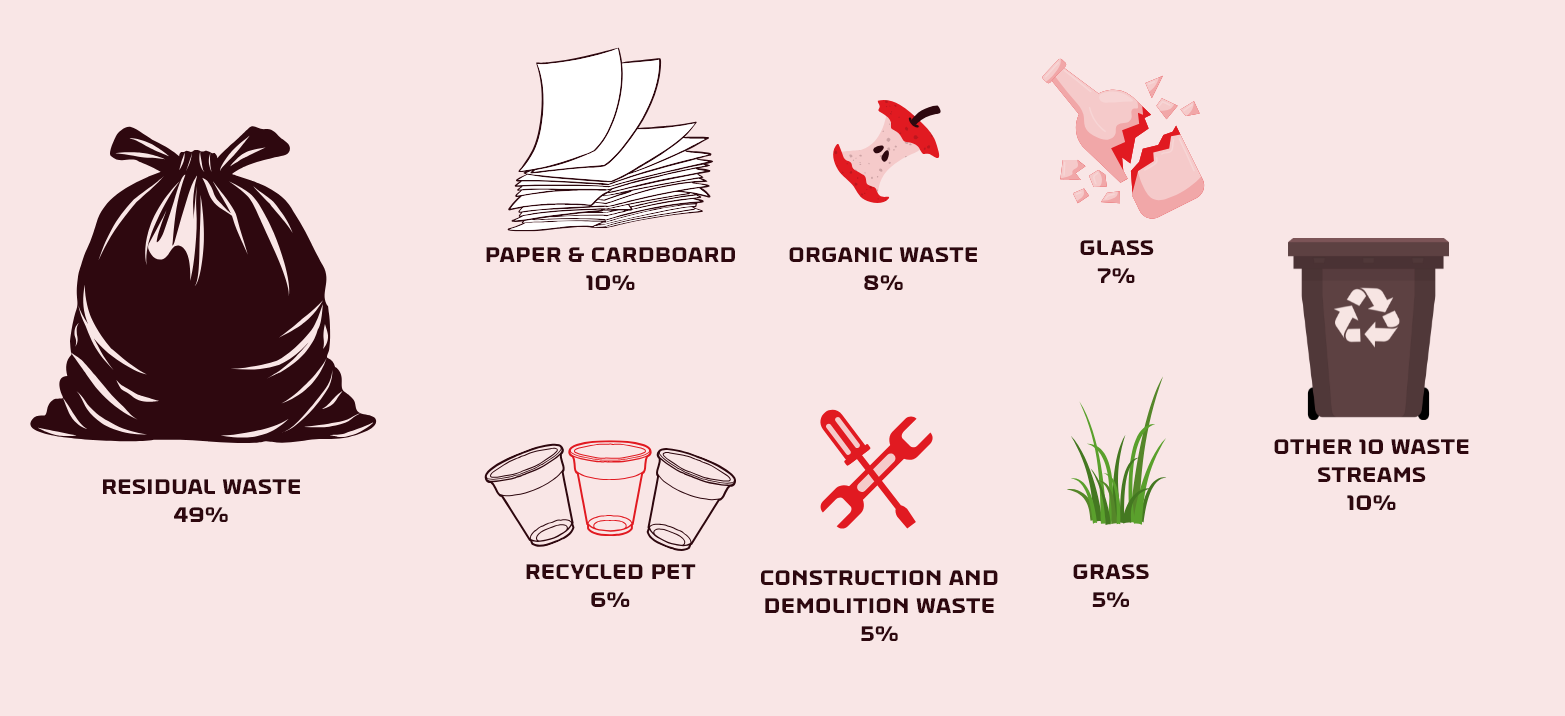
The Johan Cruijff ArenA is the stage for the biggest events in the Netherlands. In 2024/2025, we welcomed almost 2.5 million visitors for football matches and musical giants such as the Toppers, Taylor Swift and AC/DC. That guarantees spectacle - but also mountains of waste. 463 tonnes in 2024/2025.
463 tonnes in 2024/2025, the weight of approximately 23 full player buses.
Almost half of that is residual waste. In other words, waste that can no longer be recycled and therefore ends up in the incinerator. That hurts, because our goal is to reduce residual waste in our stadium to zero. Everything can be given a second, third or even tenth life. That is why we are building a stadium without residual waste and putting reuse in the spotlight.
“Circularity requires awareness and behavioural change – on our part, on the part of our suppliers, partners and visitors. Because we need the entire chain, realisation can sometimes be complex. But that is precisely why it is so valuable to make progress together, step by step, towards our Net Positive ambition.”

Linda Aarsen
Service Desk & Projects Coordinator,
Johan Cruijff ArenA Facilities Department

From waste mountain
to gold mine
Every day, our cleaning teams keep the stadium in tip top condition. Rubbish is taken to our own ArenA Waste Station. There, we sort it into 17 categories, from paper, plastic, metal and wood to organic waste and residual waste. Our waste partner Renewi collects all waste streams and then sorts our residual waste again. They extract valuable materials, and the rest goes to the power station to generate energy for Dutch households. This is already a fairly efficient process, but we want to go even further.
Our goal is twofold and crystal clear.
goal 2030
30%
less waste
per ArenA visitor than in 2022/2023
goal 2030
-15%
residual waste
ArenA recycles 85% of total waste
Reliable data
We are continuously improving waste weighing to increase data accuracy in our dashboards. For example, we started weighing metal waste streams separately this year. Reliable data helps us to manage more effectively and test the effectiveness of our actions. At the same time, we also realise that further improvements are needed, which may lead to adjustments in (historical) data. Indeed, we embrace these refinements and communicate about them openly and transparently.
This is what our waste looked like in 2024/2025
The R ladder
to the top
A circular stadium isn’t achieved in one sprint. You have to climb many steps to get there. The R ladder is a commonly used strategy for circularity. It is a ladder: the higher you climb, the greater your impact. We focus on Reduce, Reuse and Recycle. This is where we can make the biggest difference.
Reduce
Less is more
Johan Cruijff ArenA opts for the most efficient use of materials wherever possible. First, we consider whether we can do without it. And we challenge everyone to do the same.
Reuse
Earning a second chance
For example, we replaced red plastic balcony seats with leather seats. The old red seats were given a new place in the stands, replacing old white seats that are now in storage for repairs. Other replaced seats found a second life at various amateur clubs. How's that for circular!
Recycle
Everything has value
We believe that everything can be given new value. That is why we separate our waste as much as possible and recycle it into new raw materials. Through proper separation, we are ultimately phasing out residual waste.
THE SCORE
SO FAR
2024/2025
30% less waste per visitor in 2030
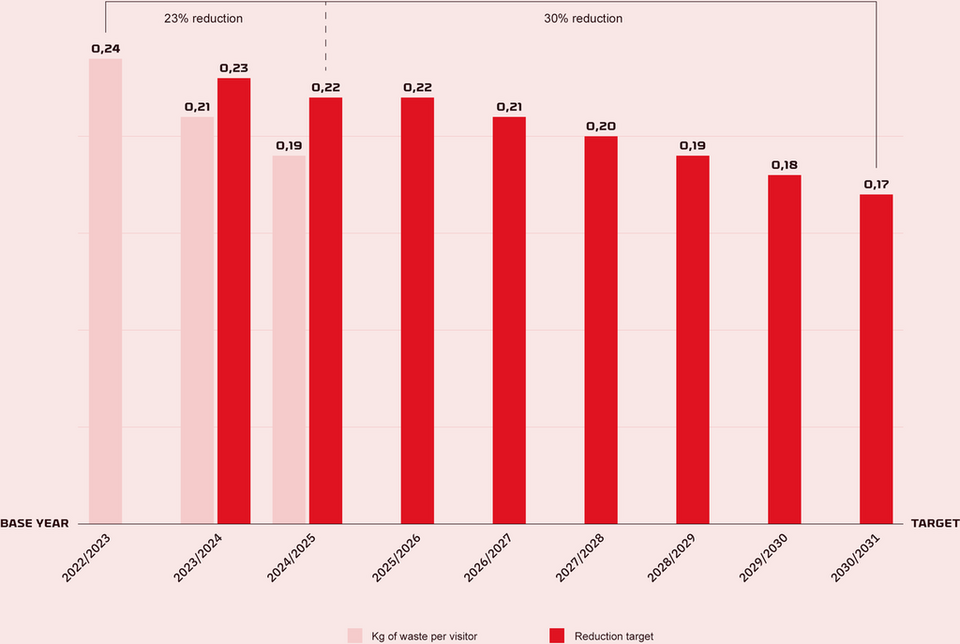
Less waste, more impact! With 0.187 kg per visitor in 2024/2025, we have already reduced waste by 23%. To achieve our goal, we need to be more critical about our own purchasing and what materials other parties bring into our building.
2024/2025
Maximum 15% residual waste in 2030
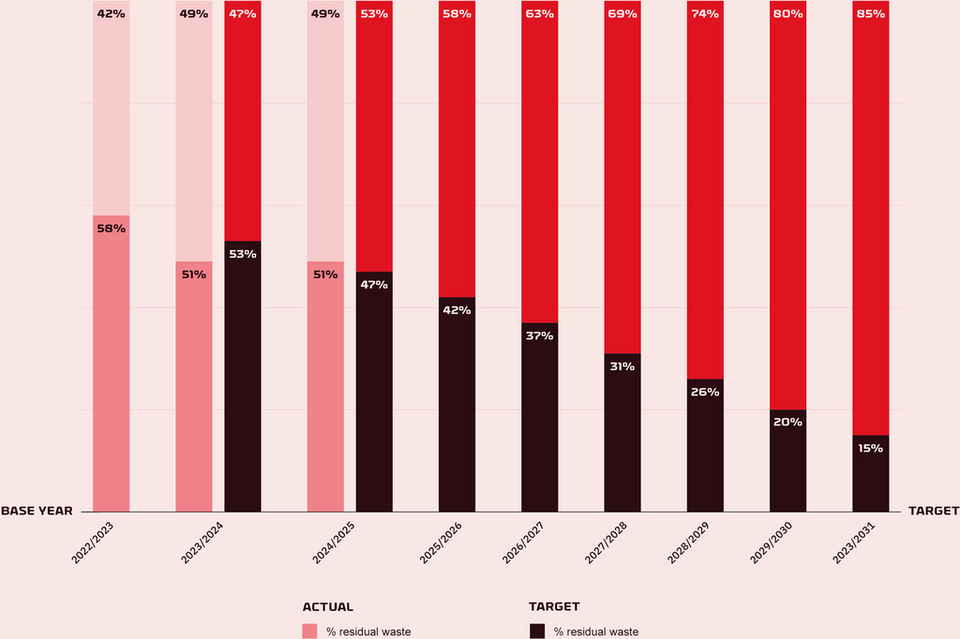
We are currently still above our target value. Our goal of a maximum of 15% residual waste in 2030 requires significant steps in the way we collect and separate waste.
Green
milestones
A circular stadium is our dream, and every day our team works hard to make that a reality. These milestones bring us closer to the finish line.
2018
Your waste is my waste
Under the name “Open Waste”, we started with joint collection of commercial waste in Amsterdam-Zuidoost. Reduced traffic in the neighbourhood, less noise pollution and lower CO2 emissions from commercial vehicles. Teamwork makes the dream work.
2022
Test, learn, repeat
We are going for the best beverage cups – for you as a visitor, for our team and for our planet. Through various pilot projects involving deposits and cup tokens, we investigated the environmental impact, visitor satisfaction and workability for our team. It is a challenge to find solutions that meet all requirements: regulations, safety, experience and the reality of cleaning and waste processing.
2024
Smart Waste becomes a game changer
Our smart automatic scales keep track of everything, down to the gram! They tell us exactly how much and what types of waste remain after each event. Knowledge is power – and this data gives us the power to constantly improve.
2024
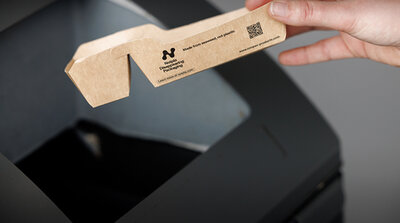
Seaweed on the menu
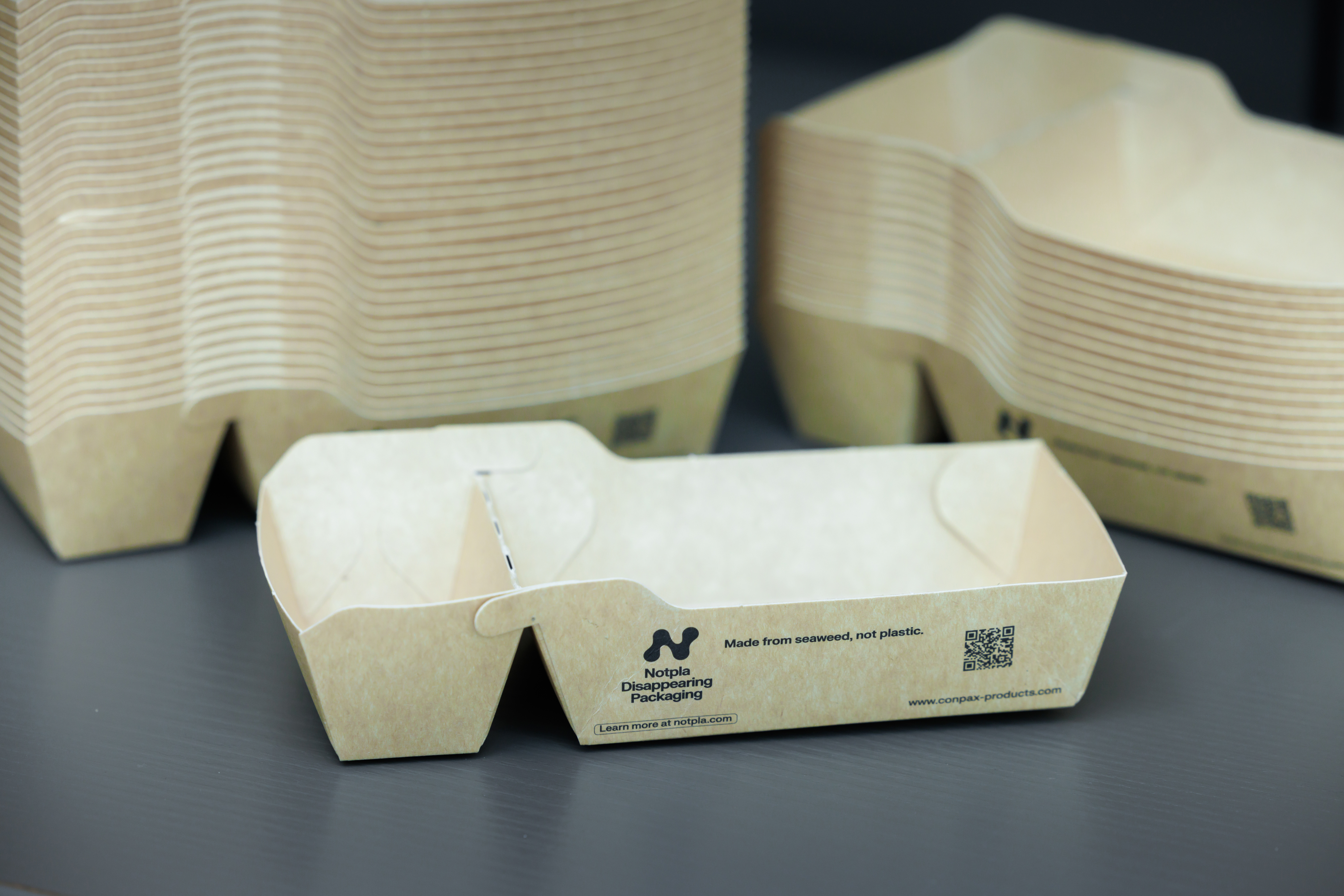
Chip and snack trays made from seaweed? Actually, it makes perfect sense. These NOTPLA containers produce 39% less CO2 emissions in production compared with a bio-plastic container. Small difference, big impact.
2024
Waste detective
We regularly open residual waste bags to examine what's inside. This way, we know what is being thrown away and can quickly seize opportunities to reduce waste and make recycling easier for visitors. Sherlock Holmes would be proud of us.
2024
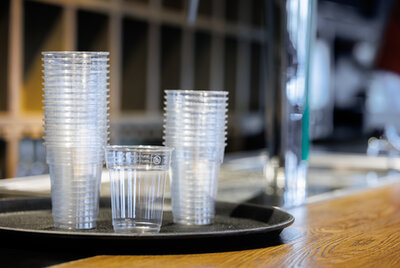
Collecting all cups
Since 2024, we have been using cups made from recycled plastic (R-Pet), which we collect afterwards to make new cups. Our winning game plan? A smart two-pronged approach: first, employees of our cleaning partner CSU collect all the cups from the stands, followed by a second round for the remaining waste. The result: we collect 75-80% of all cups sold at an event. Our ultimate goal? A full 100% score!
2025
Students at the helm
During Toppers in Concert, we were joined by students from the Trade & Entrepreneurship programme at MBO College Zuidoost, a technical training college. They mapped our material flows using a Material Flow Analysis. Complex? Not for these students. Their insights into raw materials and waste flows were invaluable.
2025
New rules
We drew up circular guidelines for event organisers. The message is clear: think critically about what you bring into our building and how it leaves. In this way, we are working together to create a circular stadium.
In
practice
spotlight
Seaweed scores in the compost
From waste to gold mine - one tray at a time
Step by step, we are building a future-proof stadium. We are also well on our way in terms of circularity. This project is one we’re proud to put in the spotlight.
read more

Challenge
Not all cups are the same
So what is the perfect cup for the ArenA?
Replacing disposable cups with reusable cups – sounds logical. But is it really more sustainable when faced with 55,000 fans? And what does it mean for safety and experience? Finding the perfect cup is harder than you think. What’s the situation?
Read more
The next phase
We are seeing a downward trend in our total residual waste volumes, but we are still a long way from achieving our goals. In the coming years, we will tackle several major challenges.
Together with caterers, we want to reduce food waste. New waste bins with recognisable labels for visitors should make waste separation easier – because only if waste is properly separated can we recycle it. In addition, we will communicate more actively with our visitors to involve them in separating their waste. We are also investigating the exact composition of our construction and demolition waste and how we can drastically reduce it. We are asking suppliers for (even) more sustainable packaging. And we continue to search for the perfect cup – one that works for visitors, our team and the planet. Step by step towards a circular stadium.
“Together with Johan Cruijff ArenA, we are working towards a future without waste. By separating waste at source and working with smart data insights, we are extracting more and more recyclable materials such as food and beverage packaging from the waste stream. The biggest challenge? Making visitors aware of their role in this process.”

Joost Manders
Implementation Manager
Renewi

Lees meer
Next page

Clean generation, smart consumption
We are committed to reducing residual waste, and we are also tackling our energy consumption head-on. Discover how we are transforming from a large consumer to a green game changer.
Seaweed scores
in the compost
From waste to gold mine - one tray at a time
In our race to zero waste, we went in search of the perfect replacement for our plastic food trays. We chose NOTPLA – containers made from seaweed and therefore plastic-free. But can we also ensure that these seaweed containers are composted? Because if we can, we can drastically reduce the volume of residual waste in the ArenA.
Teamwork makes the difference
We put our best players on the pitch: caterer Levy, producer NOTPLA and waste processor Renewi teamed up. NOTPLA provided the technical information, Levy shared experiences from other countries where composting already works, and Renewi set to work with various experiments.
The first test: We bundled the containers in a net and placed them in the composting tunnel for 17 days. The result? Partially composted, but not enough to include the food containers in the organic waste stream.
The next round: In upcoming experiments, we will tear the containers into small strips so that the bacteria in food waste can get a better grip on the material. More surface area means faster decomposition.
THE SCORE SO FAR
Every single tray means a small victory for less plastic use, and less plastic means less CO2 emissions. But we will keep going until we achieve full circularity. Our ultimate goal? All food trays and food waste straight into the organic waste stream. Bringing us closer to an ArenA without residual waste.
Our ultimate goal
All food trays and food waste straight into the organic waste stream. Bringing us closer to an ArenA without residual waste.
Not all cups
are the same
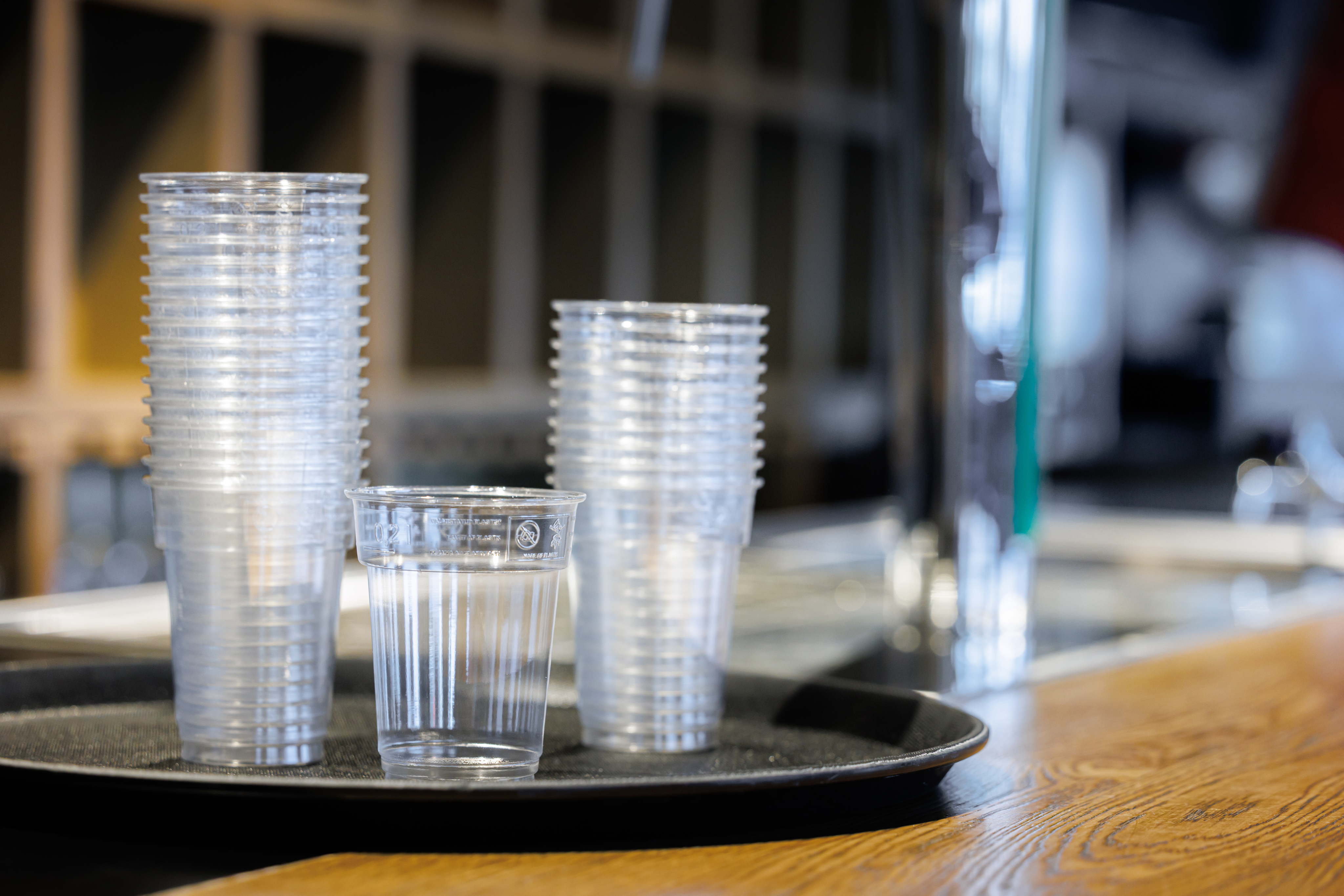
Every match day, 55,000 football fans flock to our ArenA. And for large concerts, that number can sometimes exceed 70,000! All of them thirsty and with certain expectations. That confronts us with a puzzle that is more complex than you might think: which cup is the best choice for our visitors, our team and our planet?
Replacing disposable plastic cups with reusable cups or deposit cups seems logical. Indeed, what could be more sustainable? Unfortunately, reality is more complicated. Because is it really more sustainable? And is it feasible and safe with 55,000 people? And how will all those cups end up in the right place for recycling?
In short, there is no clear winner yet. Each option tells a different story when you look at the entire chain – from production to waste processing, from logistics to user experience.
So what is the perfect cup for the ArenA?
- Safe: Visitors and staff must remain safe, and the risk of injury, misuse or incidents must be minimised.
- Sustainable: Real environmental impact, not false sustainability.
- Operationally feasible: It must be practically workable with tens of thousands of visitors.
- User-friendly: Our staff must be able to handle it easily. User-friendliness is important for staff, because it makes their work easier, faster and less prone to errors.
An objective picture
We asked research agency Rebel to conduct a large-scale study in 2025 into the best option for a cup in the ArenA. They will conduct comparative market research and interviews with our employees and external parties such as our cleaning and waste processing partners. The aim is to obtain an objective picture of the advantages and disadvantages of the current system – single-use cups made from recycled material – compared with reusable cups. This study will hopefully bring us one step closer to finding the most suitable cup for the Johan Cruyff ArenA.
In addition, we are closely monitoring the latest market developments – from biodegradable materials to innovative deposit systems. Because technology never stands still, and neither do we.